Buckwheat as a Summer Cover Crop for Home Gardens
Buckwheat grows fast, smothers weeds and feeds pollinators. What five extension and USDA sources say about sowing, timing, mowing before seed and the limits.
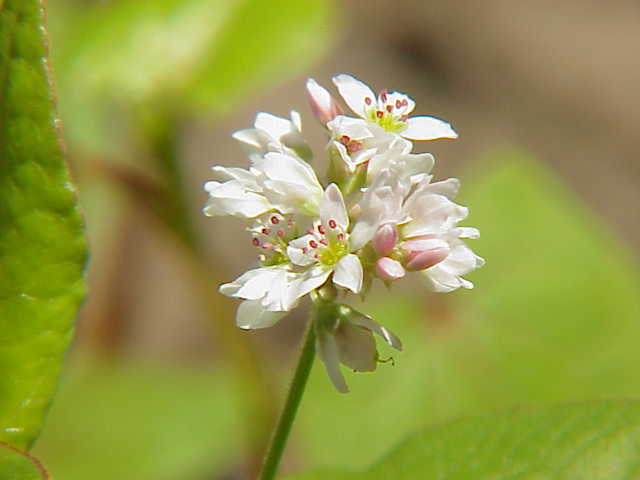

Buckwheat (Fagopyrum esculentum) is a fast summer annual that gardeners sow in empty beds to suppress weeds, protect the soil and feed pollinators. It is not a grass or a true cereal grain, it is a broadleaf plant. This article uses five sources: the University of Missouri Extension publication G4163 (reviewed March 2026), the Ohio State CFAES summary built from the Midwest Cover Crops Council (2023), the UMass Amherst vegetable program fact sheet (2006 text, last updated 2013), the USDA Agricultural Research Service Southeast cover crop fact sheet (2016), and an Oregon State University Extension article for home gardeners (2014). Cornell also runs a buckwheat information site, but the page we could read was only an index, so we did not use it as a source. Most of these sources are written for farms, and only the Oregon State article is aimed at home gardens.
Safety and handling notes
This is a low-risk crop, but a few cautions apply. No source we read covers buckwheat food allergy, and we found no source on pets. Our own caution, not from the sources: buckwheat seed sold for sowing may be treated or not intended for eating, so do not cook with seed bought for the garden unless the packet says it is food grade. Missouri says light-skinned hogs and cattle can get photosensitivity and skin rashes if buckwheat is 30 percent or more of the ration, so livestock owners should limit it. For herbicides, Missouri and USDA say buckwheat is sensitive to carryover from some products, so read the label of anything used earlier in the bed. We do not name products here.
Why gardeners use it
- Weeds: Oregon State says the fast growth and dense canopy smother annual weeds, protect the soil from erosion and conserve moisture. Ohio rates it excellent for weed suppression, but says that depends on planting early. USDA also rates weed control excellent.
- Soil: Oregon State says the fine roots loosen topsoil and are efficient at taking up phosphorus, which becomes available to the next crop when the residue returns to the soil. Ohio and USDA both rate it as a phosphorus and potassium scavenger. UMass says it can rejuvenate low fertility soils.
- Low fertility: Ohio rates its tolerance of low fertility as excellent, and USDA says it does better on low fertility soils than cereal grains.
- Pollinators and beneficial insects: Missouri says flowers appear over several weeks and support pollen and nectar for pollinators, and that beekeepers value the 6 to 8 week flowering period. Oregon State says it attracts pollinators and beneficial insects and can be cut for a bouquet.
- Speed: Missouri says it matures in 10 to 12 weeks for seed. As a cover, Oregon State says to plant it where the bed will be empty for six to seven weeks, and USDA says it can produce residue in six to eight weeks.
How to sow it
Timing. Buckwheat needs warm soil. Ohio lists a minimum germination temperature of 50 degrees Fahrenheit, and Oregon State says seeds germinate within days when soil is warmer than 55 degrees. USDA says to plant after the last frost. Ohio says it is very frost sensitive and is expected to winterkill. Ohio gives a reliable establishment window of June 11 to September 28 as its state average, so check your own local dates.
Beds. Oregon State says to seed into a clean bed, or gently till and wait about a week before seeding. Water the bed ahead of time, scatter the seed, rake it in and water.
Seed rate. Oregon State gives about 1 pound per 500 square feet, or about 3 ounces per 100 square feet, for a home garden. Field rates in the other sources are much higher and are per acre (UMass 50 pounds drilled or 70 broadcast, USDA 50 to 60 drilled or 90 to 100 broadcast, Ohio 20 to 35 drilled). The sources do not explain the gap, and the UMass and USDA numbers are higher than Ohio's.
Site. Oregon State says it prefers moist, well drained soil and does not do well in heavy shade, drought, compacted or saturated soils. USDA calls it not drought tolerant, while Ohio rates its drought tolerance as good. Oregon State says plants may wilt on hot afternoons and recover overnight. Ohio gives a preferred pH of 6.0 to 7.5.
The most important rule: cut it before it sets seed
Missouri, Oregon State, USDA, UMass and Ohio all warn that buckwheat goes to seed quickly and can become a weed in the next crop. Oregon State says to mow or cut within about a week and a half of first flowering, before the first seeds turn brown and hard, and that it sets seed 2 to 3 weeks after flowering starts. USDA says to terminate 7 to 10 days after flowering starts. UMass says to mow before seed, and Ohio says it must be terminated before seed develops. Missouri says volunteer plants after a seed set are usually easy to control by tillage or mowing, and that buckwheat has no hard seed, so normally one flush appears.
After cutting
Oregon State says residue left on the surface breaks down more slowly and helps suppress weeds, while residue turned in releases nutrients faster but tillage can break up soil structure. If you till it in, wait two to three weeks before planting the next crop. It says to try leaving the mulch on the surface when transplanting seedlings. UMass says you can follow with a fall cover crop such as rye, wheat or barley after mowing and disking. Ohio says tillage alone may need several passes when used for termination.
Where we are less certain
The sources disagree on drought tolerance and on seeding rates. The effect on diseases is described only briefly: Ohio says it may resolve symptoms of root lesion nematode and Verticillium wilt, but gives no detail, so we would not rely on that. Ohio rates nitrogen scavenging as good and USDA rates it poor. The UMass text is from 2006 and includes a seed price that is out of date. Most numbers come from farms, not gardens.
Sources
- University of Missouri Extension, Growing Buckwheat for Grain or Cover Crop Use (G4163): https://extension.missouri.edu/publications/g4163
- Ohio State CFAES, Buckwheat as a cover crop in Ohio: https://cfaes.osu.edu/fact-sheet/buckwheat-cover-crop-ohio
- UMass Amherst CAFE, Cover Crops, Buckwheat: https://www.umass.edu/agriculture-food-environment/vegetable/fact-sheets/cover-crops-buckwheat
- USDA ARS, Cover Crops for the Southeast: Buckwheat (Fact Sheet 04k, 2016): https://www.ars.usda.gov/ARSUserFiles/60100500/FactSheets/FS04k.pdf
- Oregon State University Extension, Buckwheat makes a good summer cover crop for gardens (2014): https://extension.oregonstate.edu/news/buckwheat-makes-good-summer-cover-crop-gardens