Crop rotation in a home vegetable garden: group by family, keep a map and wait three to four years
Move plant families to a new bed each year to even out nutrients and cut pest build-up. Advice from Illinois, Maryland, Minnesota and Washington State extension, including where they disagree on how much it helps.
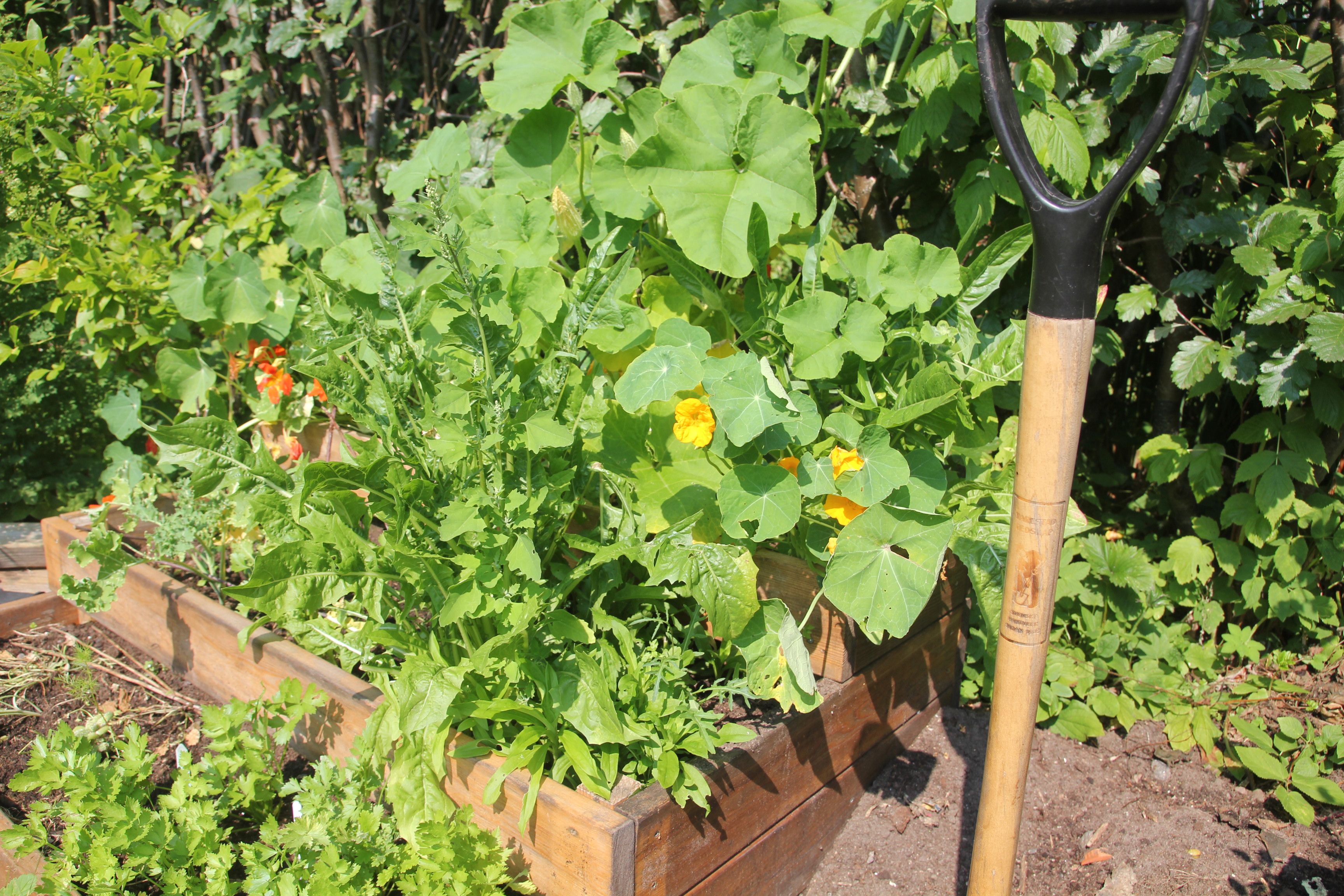

Crop rotation means growing a different plant family in a bed each year, instead of the same crop in the same place. It is a planning habit more than a chore. This guide draws on Illinois Extension, the University of Maryland Extension, the University of Minnesota Extension and a Washington State University Extension master gardener post. The sources agree on the basics and disagree on how much it helps a small garden, and this guide shows both views.
What it is
Illinois describes crop rotation as planting crops of different families in the same area in successive years. Related crops are moved to different spots from year to year. Rotating can help manage pests and diseases, improve soil fertility and raise yields.
Maryland adds that rotation also relates to succession planting, which is planting a new crop in space vacated by a finished one. Rotation is the practice of moving crop families to different locations each season.
Why families matter
- **Pests and diseases:** Illinois says many pests and pathogens target specific plant families. Planting the same family in one place year after year lets soil-borne pests and pathogens build up, because they get a host every year. Moving families interrupts their life cycles. Washington State says plants in a family tend to attract the same pests and diseases, so changing the location leaves them without a target.
- **Nutrients:** Illinois says plants in the same family use similar types and amounts of nutrition, so the soil can become depleted. Rotating helps the soil recover. Washington State says tomatoes and peppers are heavy feeders that deplete nitrogen and phosphorus, while peas and beans return nutrients by making nitrogen. Maryland says rotation can even out nutrient removal because crops differ in nutrient needs and in root growth and depth.
- **Soil structure:** Illinois says crops with penetrating or extensive roots such as corn, carrots, turnips and tomatoes can help break up compacted soil and bring nutrients up.
- **Weeds:** Maryland says weeds associated with certain crops and growing methods can become abundant over time.
How much does it help in a small garden?
The sources are not equal here, and this matters for expectations.
Maryland says rotation is an important pest and disease tool for farmers with fields far apart. It says it is still beneficial for home vegetable gardens but only marginally helpful in lessening insect and disease pressure there because the scale is small.
Illinois, Minnesota and Washington State present rotation as worth doing in home gardens. Illinois says it can work in any garden regardless of size or layout, in the ground or in containers. Washington State says it is challenging in a small home garden but doable.
A fair reading: Maryland's caution is worth keeping in mind. In a small garden, rotation may do less for pests than it does on a farm, so treat it as one habit among several.
How long between repeats
- **Illinois (2025):** the most effective schedule allows three to four years between plantings of the same family in the same place.
- **Illinois (2024):** a three-to-five-year schedule is recommended as a minimum for the method to be most effective. Move families as far as possible from the previous year's location and allow as many seasons as possible.
- **Minnesota:** the ideal rotation is three to four years, with implications for diseases, insects, nutrients and soil structure.
- **Washington State:** in its example with five families in five spaces, each family takes five years to return to its original space.
Plant families of common vegetables
From Illinois:
- **Amaranth family (Amaranthaceae):** beet, spinach, Swiss chard.
- **Allium family (Amaryllidaceae):** chive, garlic, leek, onion, scallion, shallot.
- **Carrot family (Apiaceae):** carrot, celery, parsley, parsnip.
- **Sunflower family (Asteraceae):** endive, lettuce, sunflower, salsify.
- **Mustard family (Brassicaceae):** broccoli, Brussels sprouts, cabbage, cauliflower, bok choy, collards, kale, kohlrabi, radish, rutabaga, turnip.
- **Gourd family (Cucurbitaceae):** cucumber, muskmelon, pumpkin, summer squash, watermelon, winter squash.
- **Pea family (Fabaceae):** bush, green, kidney, lima, pole and wax beans, soybean, pea.
- **Grass family (Poaceae):** sweet corn, popcorn.
- **Nightshade family (Solanaceae):** eggplant, pepper, potato, tomato, tomatillo.
- **Morning glory family (Convolvulaceae):** sweet potato (listed in the 2024 post).
Washington State groups them more simply as legumes, root, fruiting and leafy crops, and names the families as solanaceae, cucurbits, brassicas and alliums.
Building a plan
1. **List what you grow.** (Washington State)
2. **Group by family.** Washington State says this is the key step, grouping by nutritional needs and susceptibility to the same pests and diseases.
3. **Split the garden into beds or zones.** Illinois says separate beds, such as three to four raised beds, make rotation simple, and that more zones let more families rotate through. In a very small garden Illinois suggests working with neighbors, family or friends to get enough rotation and share the harvest. Washington State says raised beds or even half barrels make rotation more feasible.
4. **Draw a map.** Washington State suggests a map of your garden area. Minnesota says a garden map is probably the most important piece of documentation, since it lets you rotate between plant families. The author says she rarely remembers her layout from two or three years ago, so she relies on her maps.
5. **Shift each family one bed each year** (Washington State).
6. **Keep records.** Illinois says a garden log, including a map, diagram or photos, helps track history. Minnesota suggests spending 5 to 10 minutes in fall on key notes, and making next year's map then so you know how much space you really have.
### Sample schedules from Illinois (2024)
- **Four year:** Fabaceae, then Brassicaceae, then Solanaceae, then Cucurbitaceae.
- **Four year (grouped):** Solanaceae and Cucurbitaceae; then Amaryllidaceae, Amaranthaceae and Apiaceae; then Fabaceae and Asteraceae; then Poaceae.
- **Five year:** Brassicaceae; then Apiaceae and Amaranthaceae; then Fabaceae; then Solanaceae; then Cucurbitaceae.
### Leaf, root, flower, fruit
Washington State describes a simple approach called "Leaf, Root, Flower, Fruit", following that order in any given space. It says this replenishes soil nutrients while suppressing pests and keeping disease low. The source gives the order only, so check a local guide for which vegetables go in each group.
Cover crops in the rotation
Illinois says that when you use a cover crop in a rotation, count its family in the plan. It says the USDA recommends annual ryegrass, winter cereal rye and oats (all grasses) for soil conservation, and oilseed radish for the same. Forage radish and forage turnips, both brassicas, are recommended to help compacted soil. Crimson clover, hairy vetch and Austrian winter pea are legumes that can add nitrogen. Maryland's succession example ends a bed with a cover crop of oats and clover, or rye.
Related: succession planting
Maryland says succession planting maximizes production by planting in spots vacated by spent plants. For a continuous harvest of leafy greens, beans and cucumbers, plant small groups every two weeks. Cool-season crops (broccoli, lettuce, peas) are followed by warm-season crops (beans, tomatoes, peppers), then more cool-season crops or a winter cover crop. It suggests spring, summer and fall maps for each round, and using transplants to gain several weeks in vacated areas.
Rotation and succession work together, so give each bed a family order that covers all seasons and not only summer.
Limits and tips
- If space is limited, Illinois notes that cabbage, lettuce, Swiss chard, peppers and herbs can go into ornamental beds as annuals.
- Illinois says rotation works in containers too, by changing the family in each pot or box.
A simple plan
1. Write down what you grow and its families.
2. Divide the garden into three to five beds or zones.
3. Draw a map and take photos each season.
4. Move each family one bed each year.
5. Wait three to four years before a family returns.
6. Use cover crops and succession plantings to fill gaps.
Sources
- Illinois Extension, "Rotating crops for a more resilient garden" (Feb 2025): https://extension.illinois.edu/blogs/good-growing/2025-02-28-rotating-crops-more-resilient-garden
- Illinois Extension, "Sow, grow, rotate: how crop rotation promotes gardening success" (Jan 2024): https://extension.illinois.edu/blogs/good-growing/2024-01-05-sow-grow-rotate-how-crop-rotation-promotes-gardening-success
- University of Maryland Extension, "Vegetable Succession and Companion Planting": https://extension.umd.edu/resource/vegetable-succession-and-companion-planting
- Washington State University Extension, Yakima County, "Crop Rotation": https://extension.wsu.edu/yakima/2026/02/21/crop-rotation-2/
- University of Minnesota Extension, "Take notes now for a healthier garden next year": https://extension.umn.edu/yard-and-garden-news/take-notes-now-healthier-garden-next-year