Grow Ostrich Fern in Moist Shade and Never Eat Fiddleheads Raw
Ostrich fern (Matteuccia struthiopteris, now often listed as Onoclea struthiopteris) is a large, feathery fern for moist shade that spreads by rhizomes into colonies. It needs steady moisture and some protection from hot afternoon sun. Its spring fiddleheads are eaten in places like Maine, but the University of Maine says to cook them thoroughly, at least 15 minutes of boiling. We compared five sources. We give no fertilizer amounts and name no pesticides.
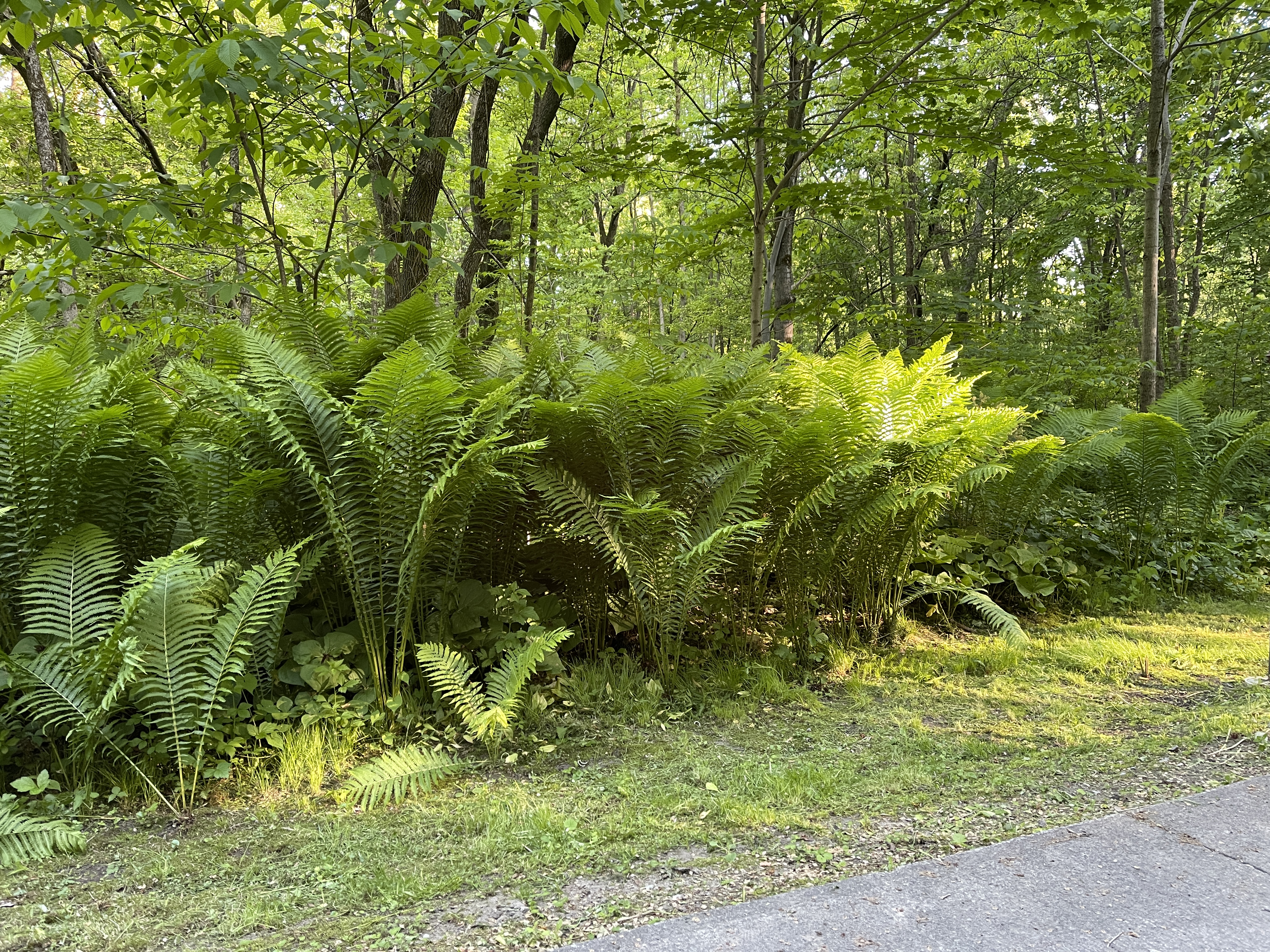

Ostrich fern is a large, vase-shaped fern with feathery fronds. Its scientific name appears in two forms: Matteuccia struthiopteris (Missouri Botanical Garden, Ohio State, University of Maine, South Dakota State) and Onoclea struthiopteris (NC State, which lists Matteuccia struthiopteris as a former name). We compared five sources: the NC State Extension Gardener Plant Toolbox, South Dakota State University Extension, University of Maine Cooperative Extension (bulletin on fiddleheads), the Missouri Botanical Garden Plant Finder, and an Ohio State fact sheet. We give no fertilizer amounts and name no pesticides.
What it is
- A clump-forming, rhizomatous deciduous fern. It does not flower (Missouri, Ohio State). It reproduces by spores and by rhizomes (South Dakota State).
- Spring fronds unroll from "fiddleheads" at the base of the crown. They are the showy, feather-like sterile fronds (Missouri, South Dakota State).
- Fertile fronds are shorter, dark brown and spike-like. They appear in mid-summer and persist through winter (Missouri, South Dakota State). Maine says fertile fronds are only on some crowns and are about 12 to 20 inches tall.
- Size varies by source: 3 to 5 feet by 2 to 4 feet (NC State), 2 to 3 feet in cultivation and up to 6 feet in moist, cool climates in the wild (Missouri, which lists 3 to 6 feet by 5 to 8 feet spread), up to 5 feet by 2 feet (Ohio State), up to 4 feet (South Dakota State).
- Hardiness: zones 3 to 7 (Missouri).
Where to plant it
- Light: Missouri says part to full shade. NC State says partial to full shade, and tolerates sun in cool temperatures with enough moisture. Ohio State says sun or shade, but it needs moist soil, especially in sun. South Dakota State says moist soil with some sun, preferably morning, and avoid hot afternoon sun. The sunnier the spot, the more moisture it needs (South Dakota State).
- Water: needs constant moisture. Missouri says the soil must never be allowed to dry out. Ohio State says it particularly needs constant moisture to avoid leaf scorch.
- Soil: Missouri says average, medium to wet soil, best rich with constant moisture. NC State says it naturally occurs in heavy, moist soil but adapts to light, rich soil. Ohio State says ferns want deep, rich, humus-laden, moist soil with good drainage, and notes crown rot can occur in poorly drained soil.
- Climate: Missouri says it prefers cool summers and is generally intolerant of hot, humid summers in the deep South. It also says to avoid windy sites.
- Use: woodland gardens, shade borders, slopes for erosion, rain gardens and wet areas near streams or ponds (NC State, Missouri). It combines with astilbes and hostas, and with early spring wildflowers that go dormant before the fern is full size (Missouri).
Spreading: plan for it
- Missouri says it forms dense colonies by rhizomes in good conditions. NC State says the runners form new colonies that can be weedy. South Dakota State says it forms colonies once established. Maine says in a favorable wild site it can cover acres.
- Give it room, or plant it where a colony is welcome. We did not find a source in this set that describes how to control spread.
Propagation and care
- Divide the crowns in spring (NC State). Ohio State says it is propagated by division and widely available in containers.
- Ohio State says ferns do best in soil with high humus content, and that foliage dies back to the ground after frost in autumn.
- Missouri's problems note: no serious insect or disease problems. NC State: no serious problems. Ohio State: free from most disease and pests.
- Deer: NC State tags it deer resistant. Missouri lists rabbit tolerance.
Fiddleheads: eat only if you know what you are doing
This part is about safety, not a recipe.
- The University of Maine says ostrich fern fiddleheads are a traditional spring food in Maine and that proper identification matters. It warns that bracken ferns have been shown to cause cancer in rats under lab conditions, and that bracken fiddleheads are fuzzy, lack the brown papery covering and lack the U-shaped groove on the inside of the stem.
- Maine says the CDC has investigated outbreaks of food-borne illness linked to fiddleheads eaten raw or lightly cooked (sauteed, parboiled or microwaved). No toxin has been identified in ostrich fern fiddleheads, but Maine advises cooking them thoroughly and boiling for at least 15 minutes.
- Maine also says to harvest into clean containers, wash with potable water and refrigerate quickly.
- We do not tell you to eat any plant. Eating wild or garden fiddleheads is your own decision. If you do, follow the Maine bulletin and its fact sheet on cooking fiddleheads, and be sure of the identification first.
- None of the five sources says whether ostrich fern is safe for cats, dogs or children. Do not let pets or children eat garden ferns, and call your vet or poison control if they do.
Where we are less certain
- The plant's size and its hardiness differ by source, and its name differs between Matteuccia and Onoclea.
- Sun tolerance depends on moisture and climate. Hot, humid summers are a problem (Missouri).
- We do not have a source on controlling its spread.
- The fiddlehead safety advice comes from one source (University of Maine) and reflects what it says about raw and lightly cooked fiddleheads.
Sources
- North Carolina Extension Gardener Plant Toolbox, Onoclea struthiopteris: https://plants.ces.ncsu.edu/plants/onoclea-struthiopteris/
- South Dakota State University Extension, Ferns: A Classic Shade Garden Plant: https://extension.sdstate.edu/ferns-classic-shade-garden-plant
- University of Maine Cooperative Extension, Bulletin #2540, Ostrich Fern Fiddleheads: https://extension.umaine.edu/publications/2540e/
- Missouri Botanical Garden Plant Finder, Matteuccia struthiopteris: https://www.missouribotanicalgarden.org/PlantFinder/PlantFinderDetails.aspx?taxonid=285874
- Ohio State University, Matteuccia struthiopteris fact sheet: https://plantfacts.osu.edu/pdf/0247-735.pdf