Grow peaches at home: protect the blooms, prune to an open center and thin the fruit
Peaches bloom early and fruit on last year growth, so site, frost risk, open-center pruning and thinning matter. Advice from Maryland, Illinois and Minnesota extension.
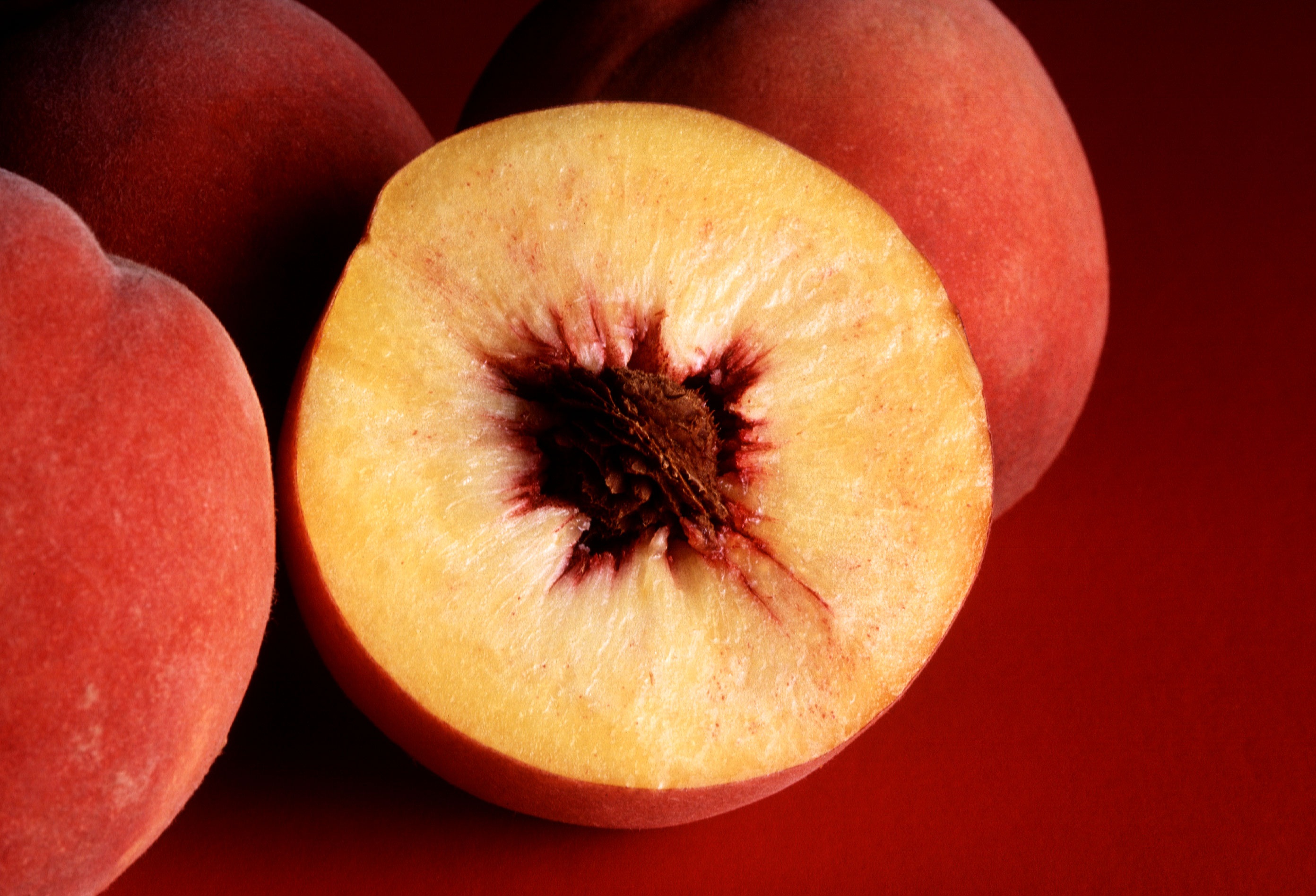

Peaches are worth growing if you accept the risks. They bloom early, they are less hardy than most tree fruit, and they like a lot of attention to pruning and thinning. This guide uses advice from the University of Maryland Extension, Illinois Extension and the University of Minnesota Extension. Dates and numbers come from U.S. climates, so adjust them for yours.
Know the risks first
Maryland describes stone fruits (peaches, nectarines, plums, apricots and cherries) as closely related Prunus trees whose seeds are inside a hard pit. Most are native to warmer climates, so they are very susceptible to low winter temperatures, and they bloom earlier than apples and pears, so the flowers often suffer spring frost damage. Maryland adds that peaches, nectarines and apricots are less hardy than cherries and plums, that all stone fruits are prone to a wide range of insects and diseases, and that fruit production can swing widely from year to year.
Illinois says most peach cultivars are not winter hardy enough for northern Illinois, and that peaches tend to do well in central and southern Illinois. Minnesota says peaches love warmth more than the other stone fruits, so they are the most limited for varieties in Minnesota. If you live in the southern part of the state or have a mild microclimate, the hardier varieties Reliance, Contender and Intrepid may work, and Twin Cities gardeners report a moderate crop every year or so.
Minnesota's view is a fair summary for any cold-edge site. A cold night after a few warm days can freeze the flowers and cost you the whole crop, but you probably get fruit the following year, and in the good years you get a lot.
Choose the site
Maryland says to plant stone fruits only in the best locations: excellent air circulation and soil drainage, and protection from high winds. Minnesota adds two warnings. Do not plant where water stands after rain, and avoid the south side of buildings, since heat trapped there on sunny spring days can make trees bloom too early.
For spacing the sources differ a little. Maryland gives about 20 feet by 25 feet for stone fruit trees, depending on cultivar and rootstock. Minnesota says space trees 12 to 20 feet apart, and to assume the spread will be at least as great as the height, so two trees that reach 15 to 20 feet need at least 20 feet between them.
Choose the variety
Illinois suggests Reliance for northern Illinois. For central Illinois it names the yellow-fleshed Comanche, Madison and Reliance and the white-fleshed Belle of Georgia. For southern Illinois, which can also be planted in favorable spots in central Illinois, it lists Harbelle, Redhaven, Comanche, Harken, Golden Jubilee, Madison and Cresthaven.
Maryland's list includes Bellaire, Candor, Desiree, Garner Beauty, Glohaven, Loring, Newhaven, Raritan Rose, Red Rose, Redhaven, Redskin, Rich May, Summerglo, Sunhigh and White Hale. Some notes from it:
- **Redhaven:** the most popular peach in the Mid-Atlantic, semi-freestone, bears well at a young age, and requires thorough thinning.
- **Glohaven:** vigorous trees with buds that are very hardy against spring frost, resistant to bacterial leaf spot.
- **Candor, Desiree, Bellaire and Rich May:** resistant to bacterial leaf spot (Desiree and Rich May are early ripening).
- **Loring:** heavy crops but blooms early.
Maryland also notes genetic dwarf cultivars such as Bonanza that reach only 5 to 6 feet. Illinois says most peach cultivars are self-fruitful, and suggests standard trees or ones grafted on St. Julian A dwarfing rootstock. Minnesota says that for most stone fruits you need at least two compatible trees, but that applies to hybrid plums and apricots. Check each variety for your own pollination needs.
Planting
Minnesota says bare-root trees should go in as early as the ground can be worked in spring, while still dormant, and potted trees any time in the growing season (spring is best) after frost danger has passed. Soak bare roots in water for 2 to 4 hours. Do not prune roots in general, though a very long one may be trimmed. Do not fertilize at planting or heavily amend the soil from the hole. Minnesota warns that this creates a "flower pot" effect where roots never leave the amended soil and the tree is poorly anchored and less drought-tolerant. Water right after planting and top up the soil if it compacts.
Water, feed and mulch
- **Water:** Maryland says do not let roots dry out during establishment, the first five years after planting. Stone fruits are shallower rooted than apples and pears, so they tolerate drought less. Peaches are most sensitive at "final swell," when fruit is rapidly growing, so water deeply then. Minnesota says young trees need 1 to 2 inches of water a week from rain or irrigation, about 5 gallons once a week in hot dry weather, with slow deep watering rather than frequent shallow watering. It also warns that overwatering new trees can cause root rot. After the first year, regular rainfall should be enough except in hot, dry spells.
- **Mulch:** Maryland says a 2 to 3 inch layer of organic mulch over the root zone cuts weeds and holds moisture. Minnesota says about 4 inches in a circle at least 4 feet across, kept a few inches from the trunk, and weeds and grass kept at least 2 feet from the trunk for the life of the tree. Maryland says mulch to within 6 inches of the trunk, which also protects against mower and trimmer damage.
- **Feed:** Minnesota says an established tree on a good site needs minimal fertilizer. If shoots on a young non-bearing tree grew 15 inches or more, you do not need to fertilize, and never fertilize a tree with normal or vigorous growth. In spring, if last year's growth was under 12 inches, add compost.
Pruning: open center
Illinois and Maryland both recommend the open center system for peaches. It gives a vase-shaped tree with no branches in the middle, so light and air reach the inside, which also helps reduce brown rot on fruit (Maryland) and keeps fruiting limbs low for easy pruning and picking.
### Timing: the sources differ
Minnesota says to prune existing trees in March before growth begins, after the coldest weather. Maryland gives different advice for stone fruits: they are very susceptible to canker diseases that enter through bark injuries and pruning cuts, and trees pruned in late winter cannot protect the wounds, so prune from bud swell through petal fall in spring. Illinois's page does not give a date. The two do not agree, so the article does not pick one. If you prune in late winter, know that Maryland says the wounds are open to canker, and ask your local extension office which timing fits your climate.
### Training in the first years
- **At planting (Maryland):** cut a whip back to 26 to 30 inches, or the tree will grow major branches too high. For trees with healthy branches at least 18 inches up, choose 3 or 4 scaffolds from 18 inches up, one at each compass point, growing at a 60 to 90 degree angle from the trunk. Cut them back by half to a bud facing away from the center, remove all branches lower than 18 inches, and cut the leader to a bud just above the top branch. In summer pinch off shoots growing toward the center.
- **At planting (Illinois):** head unbranched trees back to 27 inches. The open center is a short trunk of about 2.5 to 3.5 feet with two, three or four scaffolds, the lowest at least 15 inches and the highest no more than 30 inches from the ground. If equal in size, shorten scaffolds to 10 to 15 inches. If unequal, cut each to 3 to 5 inches and leave two buds. If there are no good branches, top at 27 to 30 inches and select scaffolds after a year.
- **First spring after planting (Maryland):** remove broken or diseased branches and vigorous upright shoots inside the scaffolds. **After one year (Illinois):** select scaffolds if not done, cut other branches at the collar, and remove laterals on the scaffolds within 18 inches of the trunk.
- **Second spring (Maryland):** on each scaffold choose two or three limbs from last summer as sub-scaffolds, 6 to 8 inches apart and 18 to 24 inches from the trunk. Remove other side limbs, and shorten the chosen limbs and the primary scaffolds by half. Remove large vertical limbs completely.
- **Years 2 to 4 (Illinois):** prune as little as possible, but keep scaffolds nearly equal in size and the center open. Peaches should start bearing in their third year.
### Mature trees
Fruit forms on last year's growth. Maryland says the best fruiting wood is 12 to 18 inches long, and that yearly renewal pruning forces new shoots that flower and fruit in their second year, then produce little after that. When trees begin to bear heavily, Maryland says prune severely to stimulate new growth, remove or head back large branches in the upper tree, thin and shorten inside limbs and remove very short slender shoots and very long ones. Illinois agrees: after year 5, peach trees are in heavy production and need moderate to heavy pruning each year, and the older the tree, the heavier the pruning. Scaffolds that grow too long may break under a load of fruit.
### Neglected trees
Illinois says neglected peaches are dense and lacking in vigor and tolerate heavy pruning. Choose scaffolds to keep, remove dead, diseased and injured wood, then thin and shorten what remains. The most practical method may be dehorning, cutting scaffolds back nearly to the trunk. It usually revives old trees but costs a year of crop. Do it all at once in a year when winter cold has killed the fruit buds anyway, or cut back one scaffold a year to reduce but not eliminate the crop.
Thin the fruit
Maryland says small immature fruits drop naturally in late spring, a self-thinning known as "June drop", but hand thinning is still needed to leave 4 to 6 inches between developing fruits. It notes that a full crop results from just 5 percent of flowers becoming fruits, and that peach trees produce a full crop when only 5 to 10 percent of flowers set fruit. Too little thinning gives small fruit. Maryland also says severe thinning is one thing that encourages split pits (see below).
Pests and problems
Maryland lists the main troubles of stone fruits: brown rot, peach leaf curl, black knot, bacterial spot, Cytospora canker, peach scab, plum curculio, Oriental fruit moth, peach tree borer and spotted wing drosophila. Illinois names brown rot, peach leaf curl and bacterial spot as the common diseases, which can be controlled by fungicide spray. Maryland says brown rot is the one all stone fruits are susceptible to, and that apricot, sweet cherry and peach are very susceptible. Follow the label and local guidance if you spray. For product choice and timing, Maryland points to Virginia Cooperative Extension's Pest Management Guide (Home Fruit chapter).
Some problems that are not caused by pests (Maryland):
- **Gum oozing at the trunk base:** clear gum suggests mechanical injury or stress, and gum mixed with sawdust-like frass suggests borers.
- **Cracked bark, south or west side:** frost cracks and sunscald. Thin bark makes stone fruits more vulnerable. Consider white latex paint on trunks and large scaffolds of young trees. Late summer or early fall pruning or fertilizing makes this worse.
- **Bud and flower loss:** winter kill, spring frost, or misused dormant oil and sprays. Avoid very early blooming cultivars.
- **Split pit:** the pit opens at the stem end. It occurs more on early cling peaches and is encouraged by severe thinning, excessive rain and too much nitrogen.
- **Water sprouts and suckers:** pull or cut them promptly. Remove suckers below the graft union.
Maryland adds that stone fruit trees tend to have shorter lives than apples and pears: commercial peaches are useful for 12 to 15 years, though well-managed trees may produce for 15 to 20 or more. Minnesota says to protect trees in winter with tree guards and fencing, since rodents chew bark, and to cut root suckers to the ground in June and July.
Harvest and storage
Maryland says let stone fruits ripen on the tree, because sugar will not increase after picking, but pick while still firm to reduce fruit disease, especially brown rot. Minnesota says that as fruit ripens the flesh softens and the skin color changes. A light squeeze should yield to gentle thumb pressure, and the best test is to taste. To protect next year's fruit buds, twist the fruit slightly while pulling. Handle gently and do not pile fruit deep, to avoid bruising. Refrigerate right after harvest in perforated plastic bags or loosely covered containers at 32 to 40°F. Minnesota also suggests netting over trees as fruit ripens, to keep birds away.
A simple plan
1. Pick a site with good air, drainage and wind protection, away from the south wall.
2. Choose a variety hardy and disease-resistant enough for your area.
3. Plant bare-root trees while dormant, with no fertilizer in the hole.
4. Cut the whip to 26 to 30 inches and build an open-center frame of 3 or 4 scaffolds.
5. Water deeply, keep the mulch off the trunk, and watch for frost at bloom.
6. Prune every year for new fruiting wood, and thin fruit to 4 to 6 inches apart.
7. Ripen on the tree, taste, and refrigerate.
Sources
- University of Maryland Extension, "Growing Stone Fruits in a Home Garden - Cherries, Peaches, Plums": http://extension.umd.edu/resource/growing-stone-fruits-home-garden-cherries-peaches-plums
- Illinois Extension, "Peaches" (Fruit Trees for Home Gardens): https://extension.illinois.edu/fruit-trees/peaches
- University of Minnesota Extension, "Growing stone fruits in the home garden": https://extension.umn.edu/garden-and-home/yard-and-garden/gardening-in-minnesota/growing-stone-fruits-in-the-home-garden