Grow potatoes at home: seed tubers, hilling and storage
Potatoes like cool soil, certified seed tubers and steady water. Plant early, hill as the plants grow, dig on a dry day and cure before storing. Advice from Maryland, Illinois and Minnesota extension.
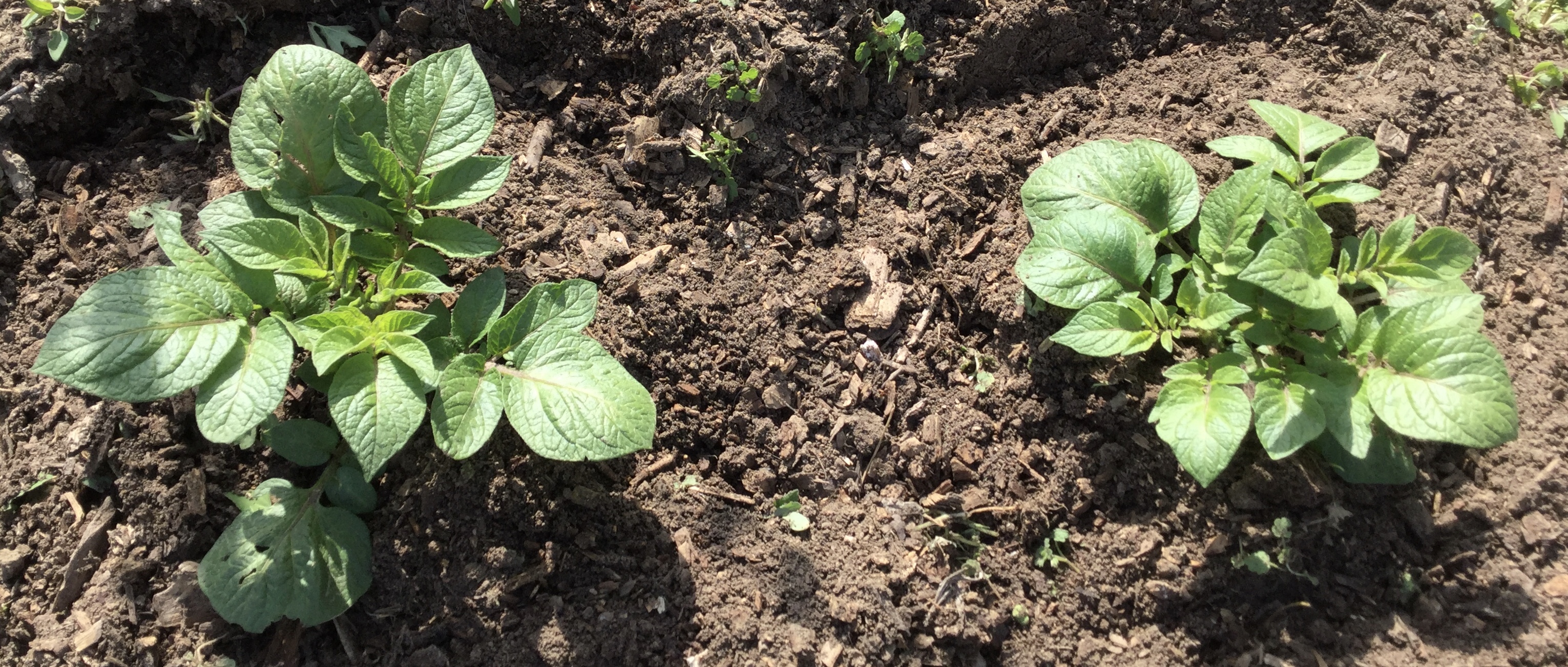

Potatoes are one of the easiest crops to start and one of the easiest to spoil with small mistakes: warm soil, uneven water or the wrong seed. This guide combines advice from the University of Maryland Extension, Illinois Extension and the University of Minnesota Extension. Dates and temperatures are for U.S. climates, so adjust them for your area.
How potatoes grow
Maryland and Illinois both explain that a potato is not a root. It is an enlarged underground stem called a tuber, and it forms at the ends of underground stems called stolons. Minnesota says the plant grows more stolons when more of the main stem is underground, which is the reason for hilling.
Potatoes are a cool-season crop. Illinois says tubers form best at soil temperatures between 60 and 70°F and fail to form when the soil reaches 80°F. Maryland agrees that soil above 80°F slows tuber development. Maryland says potatoes are half-hardy: they survive light frost, but not heavy frost or freezing.
Start with the right seed
- Buy certified, disease-free seed potatoes. Maryland, Illinois and Minnesota all recommend this.
- Maryland says supermarket potatoes and last year's garden tubers can carry disease without showing symptoms. Minnesota adds that grocery potatoes may be treated to stay dormant, so they can be slow to sprout.
- Maryland says seed potatoes should be firm and not sprouted.
- Small whole seed potatoes are the easiest. Minnesota says tubers 1 to 1 1/4 inches across need no cutting. Illinois says small, whole, certified seed is often the best choice for home gardeners.
- To cut larger tubers, aim for pieces of 1 1/2 to 2 ounces (Maryland and Illinois), or about 1 1/4-inch chunks (Minnesota). Every piece needs at least one eye. Minnesota says two or three is better and recommends a clean knife and cutting board.
- Let cut pieces dry for a few days before planting. Maryland says this helps avoid rot. Minnesota says to keep them at 60 to 70°F until a tough layer forms on the cut surface. Illinois says to plant soon after cutting, so the sources differ on how long to wait.
Maryland also describes "green sprouting": keep whole tubers in the dark at room temperature until they sprout, then expose them to light to keep sprouts short, then cut and plant.
Choose a spot and prepare the soil
- Sun. Maryland says at least 6 hours of direct light a day, and prefers 8 to 10.
- Drainage. Maryland says well-drained soil high in organic matter. Minnesota says well-drained, sandy soil, and notes that poorly drained soil is more likely to give diseased tubers. Illinois says the soil should be fertile and well drained, and that clay soil should be improved with organic matter.
- pH. Maryland and Minnesota say 6.0 to 6.5. Maryland says that where scab is a constant problem, a pH of 4.8 to 5.8 is recommended. Minnesota says potatoes tolerate pH as low as 5.
- Rotation. Minnesota says to avoid places where tomatoes, potatoes, peppers, eggplants or tomatillos grew in the past three or four years, because disease spores stay in the soil.
- Fertilizer. Maryland says potatoes have a high nutrient requirement, with fertilizer applied before planting and side-dressed about six weeks later when tubers begin to form. Minnesota says to side-dress about four weeks after planting and again two weeks later with hilling, and notes that this differs from its advice for other vegetables. Both say to get a soil test. Minnesota warns not to use "weed and feed" fertilizer.
When and how to plant
- When. Potatoes are among the first vegetables planted. Maryland says March 15 to May 1 depending on location, with soil at least 45°F. Illinois says March or early April, and warns that planting into cold, damp soil makes seed pieces more likely to rot. Minnesota says plant as soon as the soil warms, early April around the Twin Cities and May further north.
- Late crop. Maryland says early varieties can go in until June 1. Illinois says midseason and late varieties can be planted as late as July 1, and that late varieties are best for winter storage.
- Spacing. Maryland says 8 to 12 inches apart in rows 24 to 36 inches apart, closer (about 9 inches) for mainly new potatoes and up to 20 inches for large storage potatoes. Illinois says 10 to 12 inches in rows 24 to 36 inches apart, and notes that the closer row spacing shades the soil and helps keep it cool. Minnesota says 10 to 12 inches in rows 30 to 36 inches apart.
- Depth. Cut side down. Maryland says 3 to 5 inches (5 to 6 inches for later crops). Minnesota says 3 to 5 inches and cover with about 4 inches of soil or compost. Illinois says 1 to 3 inches in a furrow, so depth advice varies.
Hilling
When shoots emerge and the plants are growing, pull soil up around them. This keeps tubers away from light, which turns them green.
- Minnesota says to start when stems are about a foot tall and repeat once or twice more, for a total of 6 to 8 inches of soil.
- Maryland says to hill when the tops are fully grown, with hill tops no more than 6 inches above grade.
- Illinois says to build a low ridge gradually, 4 to 6 inches high by summer. It also warns to be very careful when hoeing near the plants because tubers are easily cut.
- Maryland adds a thick straw mulch after hilling to keep soil cool and moist and to deter Colorado potato beetles.
Illinois also describes "straw potatoes": plant seed pieces on the soil surface, cover with 4 to 6 inches of loose straw and do not hill. It says the straw keeps the soil about 10°F cooler and gives better shaped tubers, and that it works better for late varieties.
Water
Minnesota says a lack of water early can cause knobby or hollow potatoes and stop plants from forming tubers. It recommends soaking thoroughly once or twice a week, and about an inch of water a week in total, more often in sandy soil. Illinois says even moisture while tubers develop also helps avoid knobs from secondary growth. Maryland says too much or too little water is linked to blackheart, cracks and misshapen tubers, and to avoid overhead watering because it can spread fungal disease.
Pests and diseases
- Colorado potato beetle, potato leafhopper, potato tuberworm and common scab are the problems Maryland lists.
- Minnesota says cutworms cut stems at the soil line, and beetle adults and larvae can strip leaves. It describes scab as dark, rough, corky spots on the skin that do not rot the tuber and are safe to eat.
- Minnesota lists early blight, late blight and verticillium wilt. Crop rotation helps prevent many of them.
- Illinois lists flea beetles and leafhoppers. The text we read ended before the rest of its list.
Harvest
- New potatoes. Maryland says 6 to 8 weeks after planting, usually after flowering. Minnesota says 7 to 8 weeks. Dig about a foot down, or dig beside the plant and take a few, leaving the plant to keep producing.
- Mature potatoes. Minnesota says harvest after the plants have dried or tubers reach full size. Maryland says that if you want to store them, leave tubers in the ground 2 weeks after the plants die back so the skin thickens.
- Dig on a dry day. Maryland says not to dig when the soil is wet. Use a garden fork carefully to avoid piercing tubers. Maryland says bruises and cuts let in fungi and bacteria that cause storage rots.
- Minnesota says to eat damaged tubers first and not store them.
- Maryland says yield is about 6 to 15 pounds per 10-foot row, and days to maturity are 90 to 120.
Cure and store
- Skins should be hard to rub off with your thumb (Minnesota). Maryland says to cure for 10 to 14 days at 50 to 60°F in high humidity. Minnesota says 60 to 65°F in a warm, well-ventilated place, in the dark, for 10 days or more.
- Brush off dry soil and do not wash before storage (Maryland and Minnesota).
- Storage temperature differs. Maryland says 40 to 50°F and about 90% humidity for 6 to 8 months, in ventilated bags or boxes, out of the light. Minnesota says 32 to 40°F and 95% humidity, such as a refrigerator, but 40 to 50°F for potatoes that will be fried, to avoid cold-induced sweetening and dark fries.
Safety: green potatoes and sprouts
Maryland says green potato skin is linked to solanine, a bitter, toxic compound, and green parts should be cut out and discarded. Minnesota says to remove green areas before cooking, not to eat potatoes with extensive green areas, and not to eat sprouts because they can be toxic. Minnesota also says home-canned potatoes must be done in a pressure canner.
Quick plan
1. Buy certified seed potatoes and let any cut pieces dry.
2. Plant when the soil has warmed to at least 45°F, 3 to 5 inches deep.
3. Hill when shoots are about a foot tall and again once or twice.
4. Water evenly, about an inch a week.
5. Dig on a dry day, cure, then store cool and dark.
Sources
- University of Maryland Extension, "Growing Potatoes in a Home Garden" (updated March 25, 2026): https://extension.umd.edu/resource/growing-potatoes-home-garden
- Illinois Extension, "Potato": https://extension.illinois.edu/gardening/potato
- University of Minnesota Extension, "Growing potatoes in home gardens": https://extension.umn.edu/garden-and-home/yard-and-garden/gardening-in-minnesota/growing-potatoes