Magnolia Trees: Choosing, Planting and Pruning
Magnolias range from small shrubs to 80-foot trees. Six extension and garden sources on choosing a species, site, planting time, pruning and problems.
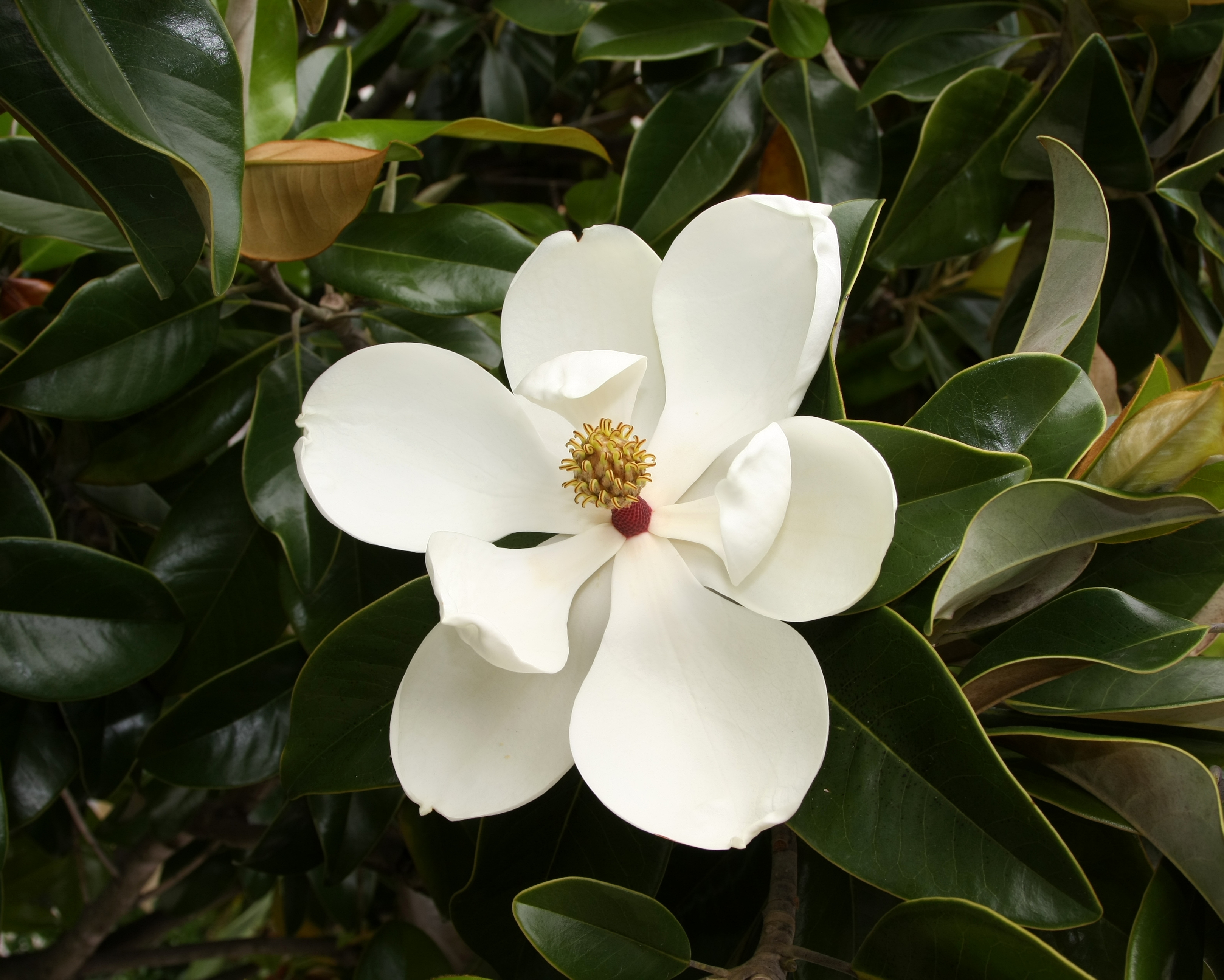

Magnolias are trees and shrubs with large, scented flowers that belong to a very old plant family. They range from compact shrubs to large trees, so the first decision is which magnolia fits your space. We compared six sources: the Royal Horticultural Society (RHS) growing guide (updated March 2026), the University of Georgia (UGA) Extension circular on southern magnolia, a University of California Master Gardener column from Napa, the North Carolina Extension Gardener Plant Toolbox entry for Magnolia grandiflora, a Penn State Extension Master Gardener article from October 2026, and the University of Illinois Extension tree selection page. The UGA text dates from 2017, the Napa piece is a personal column, and the Illinois page is only a short summary. The sources come from the UK, Georgia, California, North Carolina, Pennsylvania and Illinois, so they do not always agree.
Safety
None of the six sources discusses whether magnolia is toxic to pets or children, so we cannot say. Our own advice, not from the sources: do not let pets or children eat any part of the plant. The Napa column says to wear gloves when pruning because the juice from the tree can irritate skin. Penn State says magnolias have thick, shallow roots that need space away from sidewalks and driveways, and NCSU rates southern magnolia as medium flammability, which matters near buildings in fire-prone areas.
Pick the right magnolia
Penn State says there are over 200 species worldwide, eight of them native to North America. RHS says magnolias range from shrubs 1 to 2 m (about 3 to 6 feet) tall to large trees, and suggests star magnolia (Magnolia stellata) for small spaces, and species such as M. x soulangeana, M. denudata and M. x loebneri for a medium-sized lawn tree. RHS also says an evergreen such as M. grandiflora suits growing against a large wall.
Southern magnolia (Magnolia grandiflora) is the large evergreen. NCSU says it usually grows 60 to 80 feet tall and 20 to 40 feet wide, and that in many suburban yards its mature size is far too large, so consider a smaller cultivar. UGA lists cultivars such as 'Little Gem', which it describes as one of the smallest, still reaching 30 feet tall and 15 feet wide, and 'Edith Bogue', among the most cold hardy. NCSU says 'Little Gem' is semi-dwarf but can still reach 30 feet, and gives 'Bracken's Brown Beauty' as hardy to zone 6. Penn State lists other natives: cucumber tree (M. acuminata, up to 80 feet, the most cold hardy of the native magnolias), bigleaf magnolia (leaves up to three feet long), sweetbay (30 to 40 feet, tolerates wet soil) and umbrella tree (a medium understory tree with a heavy, somewhat unpleasant scent). Penn State says sweetbay and umbrella tree are considered threatened in Pennsylvania, so buy nursery-grown plants only.
Cold matters. RHS says evergreen M. grandiflora and M. delavayi may not survive below minus 5 C (23 F), and that frost can brown the buds and flowers of early-flowering species. Illinois says not all magnolias are hardy in northern Illinois. UGA says seedling trees may take 10 years or more to flower, while many new cultivars flower earlier.
Site and soil
On light, the sources differ. RHS says most magnolias prefer full sun and shelter, but that some later-flowering deciduous species tolerate light or dappled shade. UGA says southern magnolia grows in sun or shade. NCSU says it prefers rich soil and partial shade, since in the wild it is usually an understory tree. The Napa column says magnolias need sun to flower but do poorly in scorched, windswept places. Penn State says full sun to light shade, except the shade-loving umbrella tree.
On soil, they agree on moist, well-drained ground. RHS says many prefer slightly acidic or neutral soil, while M. x loebneri, M. sieboldii and M. stellata cope with alkaline or chalky soil, and M. grandiflora or M. delavayi suit dry alkaline soil. Penn State gives an optimum pH of 5.5 to 6.5 but says its native magnolias tolerate the higher pH common in that area. Napa warns that leaves yellow from iron deficiency in alkaline soil. Illinois says moist, acid, organic soils. NCSU says southern magnolia tolerates wet soil but not swampy soil or prolonged flooding, and UGA says it tolerates wet and dry swings.
When and how to plant
The sources give different planting times. RHS says plant between autumn and spring whenever the ground is not frozen. Penn State says fall is a good time, because roots can establish before spring. UGA says container plants can go in any time, and balled and burlapped trees usually from August to October. Napa, quoting a western garden book, says early spring for balled trees. Climate probably explains most of this.
For the hole, UGA says at least twice as wide as the root ball and as deep, with the top of the root ball level with the soil. Napa says about one and a half times the size of the root ball and slightly less deep, and notes that magnolia roots are sensitive and can be injured. UGA says a large leaf drop in the first season is common transplant shock. On mulch, UGA recommends 3 to 5 inches over the soil, RHS says to mulch the root zone every spring or autumn with a 10 cm (4 inch) collar kept clear around the stem, and Napa says keep mulch off the trunk. UGA says magnolia roots have been shown to grow more than three times further than the canopy width.
Water, feeding and the lawn problem
RHS says newly planted magnolias need regular watering for the first few years and may need water in dry spells later. Napa recommends a drip system along the root line and deep watering, and says established trees need less. On feeding, RHS says to feed annually for the first few years and generally not after that, UGA gives a three-year feeding schedule, and Napa says do not over fertilize. We leave out the amounts, which depend on your soil. A soil test is the safer guide. RHS says to keep a bare circle at least 1.2 m (4 ft) wide around a lawn tree for the first few years. Napa and NCSU both say grass or other plants will not grow well under a mature southern magnolia, and UGA says the tree sheds old leaves in spring and seed pods in late summer, so it can be messy in a lawn. UGA suggests a planting bed where the litter can serve as mulch.
Pruning
All sources say little pruning is needed. The timing differs. RHS says to prune deciduous magnolias only between mid-summer and early autumn, because cuts made in late winter or early spring can bleed sap, and to prune free-standing evergreen magnolias in spring as growth begins. Napa says to prune deciduous magnolias after they bloom and evergreens in winter before the spring growth burst. RHS says to spread renovation of overgrown trees over two or three years. UGA says to thin side branches while young, and says the tree looks best in a natural open form with branches to the ground, though formal landscapes sometimes shear it.
Problems
UGA says southern magnolia has few pest problems. NCSU says scale is an occasional pest. Illinois lists canker, verticillium wilt, scorch, chlorosis, wood rot, root rot, magnolia scale and tulip tree scale as common problems. NCSU says it is a frequent escapee from cultivation and tags it as weedy and high maintenance, so be aware of that if you live near natural areas. For treating pests or diseases, follow your local extension office.
Wildlife
Penn State says beetles are the main pollinators of magnolia flowers, and that magnolias host 29 kinds of butterflies and support many insects and birds. Napa says birds love the red-orange seeds. NCSU tags southern magnolia as bird friendly and a source of winter cover.
Where we are less certain
Toxicity is not covered by any source. Hardiness, planting time and pruning time depend on your climate, and the sources disagree. Cultivar sizes differ between sources. The Illinois page is a short summary, and the Napa piece is a personal column.
Sources
- Royal Horticultural Society, How to grow magnolias (updated March 2026): https://www.rhs.org.uk/plants/magnolia/growing-guide
- University of Georgia Extension, Growing Southern Magnolia, Circular 974 (2017): https://fieldreport.caes.uga.edu/publications/C974/growing-southern-magnolia/
- UC Master Gardeners of Napa County, Magnolias (June 2024): https://ucanr.edu/blog/napa-master-gardener-column/article/magnolias
- North Carolina Extension Gardener Plant Toolbox, Magnolia grandiflora: https://plants.ces.ncsu.edu/plants/magnolia-grandiflora/
- Penn State Extension Master Gardener, Fall is a Good Time to Plant a Native Magnolia (October 2026): https://extension.psu.edu/programs/master-gardener/counties/adams/news/fall-is-a-good-time-to-plant-a-native-magnolia
- University of Illinois Extension, Illinois Tree Selection, Magnolia: https://web.extension.illinois.edu/treeselect/magnolia.cfm